
Keep Marching: A Companion Media Guide to Suffs on PBS

Updated: May 8
The pro-shot of Shaina Taub's Tony-winning musical hits Great Performances this weekend — here's everything to learn, watch, read, and explore alongside it.
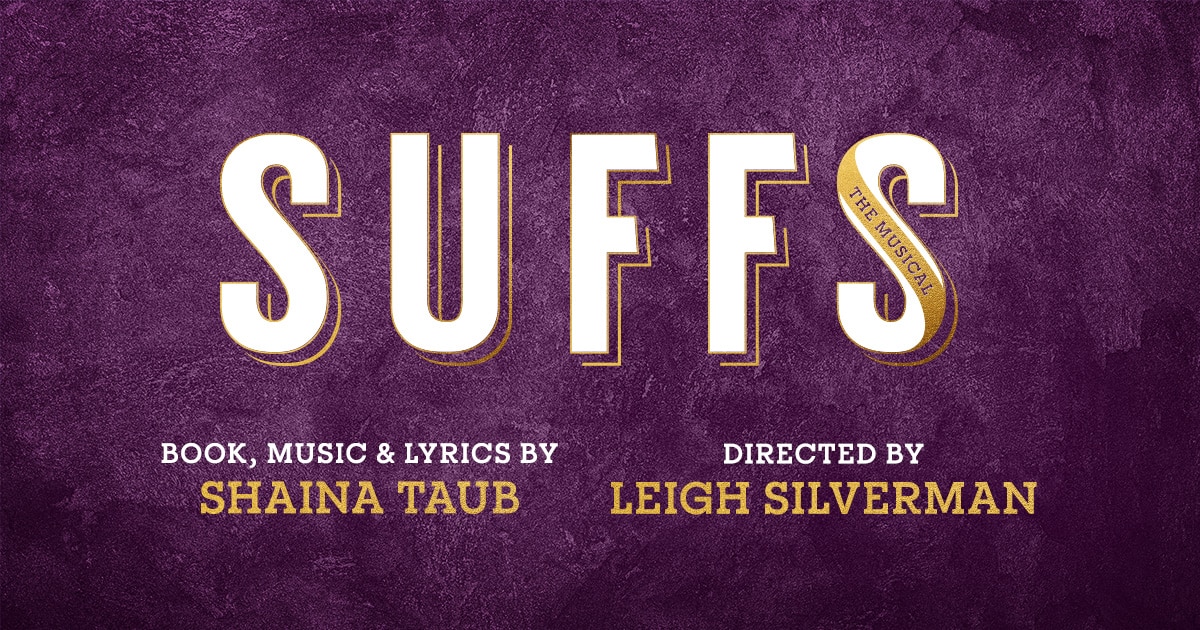
The original Broadway cast of Suffs is marching right to your screen.
On Friday, May 8 at 9 PM ET, PBS airs the filmed recording of Shaina Taub's two-time Tony-winning musical as part of the iconic Great Performances series (which will be available to stream anytime afterward on PBS.org and the PBS app.
The pro-shot was captured over four performances at Broadway's Music Box Theatre in 2024, with the full original cast, ten cameras, and a meticulous relighting of the production for the screen. Director Leigh Silverman, who brought the Broadway production to life for live audiences, oversaw the live filming herself. The result, she’s said, was designed to feel not like a film, but like the best seat in the house. She told Playbill, “That's what I'm excited about, is the people who haven't seen it to experience it for the first time, and people who have seen it to see it in a new way.”
If you want to go deeper into the history brought to life by Suffs, I've put together a companion guide with resources and additional media to explore.
If you just can’t wait to watch, check out PBS' Preview or their "Broadway's Best 2025" playlist on Youtube.

Whether or not you’ve seen Suffs on stage, on screen, or in general, the filming and airing of a high-quality live recording for public media audiences is always an exciting event. This is especially true with a show like Suffs, as the historical representation and accessibility of this particular piece of theatre's public release comes to us in times of heightened political and social tensions. With voting rights under attack, growing opposition to the 19th amendment and emboldened voices openly asking for a return to the times before the Suffs, the musical is not only art, entertainment or education--though it is all three--but a required viewing for women, men, young, old and everyone in between.
Suffs tells the story of the American suffrage movement through an ensemble cast of women and an educational, yet moving, yet fun score. The musical, completely sung through, was written by Shaina Taub, who, not dissimilarly to another historical musical composer, took on the role of activist and organizer, Alice Paul. In a well-rounded and intersectional portrayal of 1st wave feminism, the show weaves together the stories of real women from different backgrounds, generations, and ideas for how to win the vote.
There's the young, impatient, militant, visionary, Alice Paul; the trailblazing journalist and anti-lynching crusader, Ida B. Wells (portrayed by Nikki M. James of Book of Mormon fame); the strategic but cautiously diplomatic establishment figure, Carrie Chapman Catt (Broadway veteran Jenn Colella); and a parade of other women whose names history has too often glossed over, including the socialite-turned-speaker, Inez Milholland (recent Tony nominee Hannah Cruz), who lead the first ever march on Washington (On horseback. Really.) There are a few male characters, namely President Woodrow Wilson and his Chief of Staff, but women take on the roles for a satirical edge and the greater power of a cast of women telling this story.
Already an ambitious undertaking, the musical is able to portray a nuanced picture of the fight towards the 19th amendment without shying away from the internal tensions faced between women of different class, race, age, political affiliation, and strategies. It asks who gets to be part of the story of progress; what parts do people get to play—and who decides? And it does it all with historical accuracy, hair-raising harmonies and as many laughs are there are tears.
Suffs, produced by Hillary Clinton and Malala Yousafzai, ran on Broadway from April 2024 through January 2025. Taub became the first woman ever to independently win Tony Awards for Best Book and Best Score in the same season.
The History of Women’s Suffrage, in Brief
The 19th Amendment, ratified on August 18, 1920, prohibited the exclusion of women from voting on the basis of sex. The era is referred to now as 1st Wave Feminism, or more formally, the Women's Suffrage Movement.
The Brennan Center for Justice notes that:
“The 19th Amendment codified women’s suffrage nationwide, but long before its ratification, unmarried women who owned property in New Jersey could and did cast ballots between 1776 and 1807. Beginning in 1869, women in Western territories won the right to vote. And in the decade leading up to the 19th Amendment’s passage, 23 states granted women full or partial voting rights through a series of successful campaigns.” (Kendall Verhovek, “The 19th Amendment, Explained.”)
There’s no exact start time for the movement, but the fight for women’s suffrage was deeply intertwined with the abolitionist movement and the accompanying fight for universal suffrage, period. Some women were voting as early as the 18th century, but there was a long, long time between then and the 19th amendment with more going on than one musical could show.
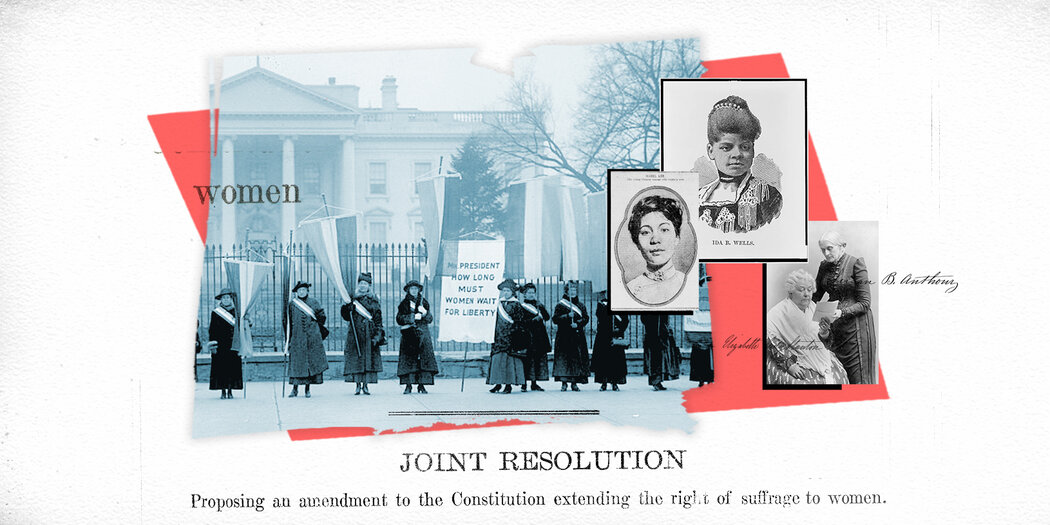
The explosive era Suffs depicts had been building for over seventy years by the time Alice Paul arrived in Washington, D.C. Paul and her college bestie Lucy Burns had studied radical tactics implemented for ultimate success in the United Kingdom— picketing, hunger strikes, civil disobedience.
While the younger cohort of activists wanted to get their hands dirty and make progress live up to its name, the older, more cautious wing of the American suffrage movement pushed back in defense of their decades-long track record of relationship building and diplomacy.
The resulting tensions, between generations and between white suffragists and women of color, who were routinely sidelined, are simple representations of the greater hurdles, hypocrisies and hostilities that suffragists faced—from inside and outside the movement itself.
Ultimately, it is the combination of fierce determination and sacrifice that brings the women and the greater movement closer to the finish line. It is in this persistence that the musical draws its signature stance of power. Seeing the women come together to march for freedom symbolically and literally, on the stage, puts the immediacy of our fragile colletive power on full display. The music of Suffs carries not just the legacy of the women who fought before us, but the power they have passed on for us to steward and build upon.
"Let history sound the alarm of how,
the future demands that we fight for it now."
~Shaina Taub
("Keep Marching," Suffs)
Dive Deeper




Primary Sources
Companion Content
BOOKS
Ida: A Sword Among Lions, by Paula J. Giddings
The definitive biography of Ida B. Wells; essential for understanding what the suffrage movement asked Black women to sacrifice.
Learn More
Alice Paul: Equality for Women, by J.D. Zahniser and Amelia R. Fry
A thorough scholarly biography for readers who want the full arc of Paul's life.
Learn More
The Woman's Hour, by Elaine Weiss
A propulsive, almost hour-by-hour account of the final battle to ratify the 19th Amendment in Tennessee. The obvious book companion to Suffs. Pairs perfectly with the heart-wrenchingly beautiful number, "Letter From Harry's Mother."
Learn More
VIDEOS
My Live Women’s History Playlist
A curation of explainers, deep dives, and videos centered around women’s history.

More from PBS (+NPR):

MOVIES/TV
Iron Jawed Angels (2004)
Where to watch: Max (HBO) | Runtime: 125 minutes | Rating: NR (est. PG-13)
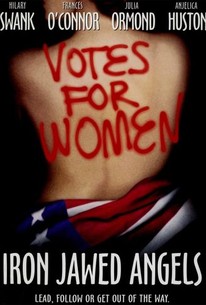
If Suffs leaves you wanting more Alice Paul, start here. Okay, real talk: I haven't seen the whole movie, but it's at the top of my watchlist for this week's premiere, as it's one of the only movies about the American suffrage movement and centers itself around Alice Paul (this time played by Hilary Swank).
Suffragette (2015)
Where to watch: Available to rent/buy on most platforms | Runtime: 106 minutes | Rating: PG-13
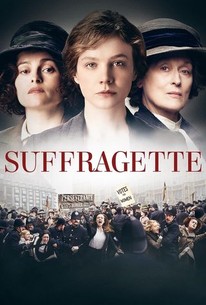
Some argue that the activists of England paved the way for American suffragists to reach ratification. Though that might be an oversimplification, there is no denying that the militant protesting of the British suffragists influenced and inspired the state-side shake-up that, as President Wilson says in Suffs with heightened irony, definitely did NOT influence his abruptly found attention to the women's decades-long protest.
This movie gives you the British side of the story, featuring star after star as the women who fearlessly fought for freedom across the isle. It also happens to be one of my favorite movies.
Mrs. America (2020)
Where to watch: Hulu | Runtime: 9 episodes (~45 min each) | Rating: TV-MA
Suffs ends with the 19th Amendment. Mrs. America picks up the next chapter. This FX miniseries recounts the true story of the movement to ratify the Equal Rights Amendment and the backlash led by Phyllis Schlafly, the conservative activist.
Where Suffs asks who gets to be part of the story of progress, Mrs. America asks what happens when progress stalls — and who gets the blame. The ERA Alice Paul first drafted in 1923 still hasn't been fully ratified. This show helps us understand why. (Plus, there's a fun scene of a conservative, domestic Sara Paulson getting super high and tripping at an ERA conference.)




Comments